

Thermoplastic road marking is widely used on highways, urban roads, intersections, and pedestrian crossings because of its durability, visibility, and rapid solidification. Successful application depends on selecting suitable equipment, controlling material temperature, and preparing the pavement correctly.
Thermoplastic road marking is widely used on highways, urban roads, intersections, and pedestrian crossings because of its durability, visibility, and rapid solidification. Successful application depends on selecting suitable equipment, controlling material temperature, and preparing the pavement correctly.
1. Main Types of Thermoplastic Road Marking Equipment
Thermoplastic preheater: A preheater melts solid thermoplastic material and maintains it at the required application temperature. Proper temperature control helps prevent material degradation and ensures consistent flow.
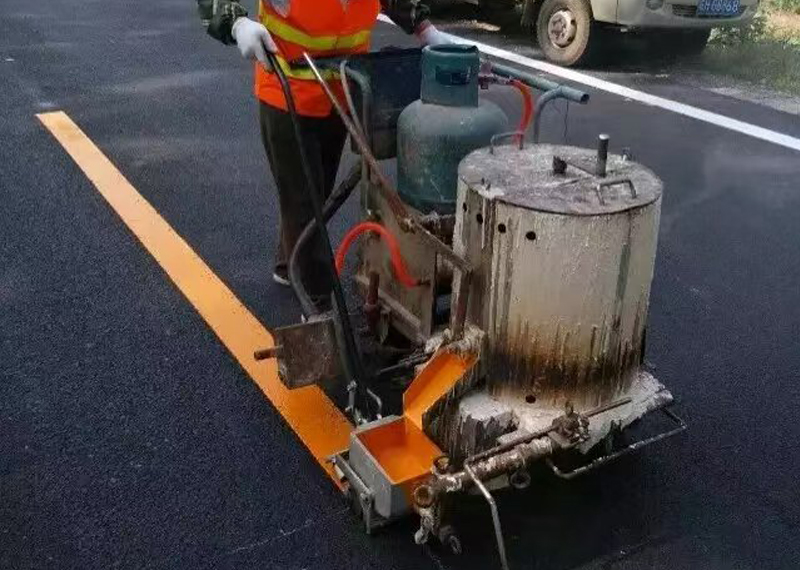
Road marking machine: Manual, walk-behind, and self-propelled machines apply thermoplastic material to the pavement. The equipment selected depends on project size, marking layout, and required production speed.
Extrusion shoe or screed: This component controls the width and thickness of the applied marking, helping create uniform lines and shapes.
Glass bead dispenser: Glass beads are applied to the fresh marking to improve nighttime visibility through retroreflection. Correct application timing and bead distribution are essential.
Auxiliary tools: Surface cleaning equipment, measuring tools, traffic control devices, and temperature monitoring instruments support safe and accurate installation.
2. Common Thermoplastic Application Methods
Extrusion Application
Extrusion is commonly used for standard road lines and other continuous markings. Molten thermoplastic passes through an application shoe onto the pavement, forming a marking with controlled width and thickness. This method is suitable for highways and urban roads requiring consistent line quality.
Spray Application
Spray application distributes molten thermoplastic through specialized equipment. It can produce relatively thin markings and support efficient coverage on suitable projects. Equipment settings and material properties must be matched to the required film thickness.
Screed Application
Screed application uses a controlled opening or shoe to deposit thermoplastic material onto the pavement. It is often used for thicker markings, including pedestrian crossings, stop lines, and directional symbols.
3. Thermoplastic Road Marking Application Process
First, inspect the pavement and remove dust, loose particles, oil, and other contaminants. The surface must meet the material manufacturer’s requirements for cleanliness, dryness, and temperature.
Next, heat the thermoplastic material according to the specified temperature range. Many formulations are applied at approximately 180–220°C, but the exact limits depend on the product. Avoid overheating, which may damage the binder.
Set the marking machine to the required line width and thickness. Apply the molten material at a consistent speed, and distribute glass beads at the specified rate while the marking surface is suitable for bead embedding.
Finally, allow the material to cool and solidify before reopening the road to traffic. Inspect the finished markings for uniformity, adhesion, thickness, and nighttime visibility where required.
4. How to Choose the Right Equipment
Equipment selection depends on road conditions, project size, marking design, and production requirements. Walk-behind machines are practical for smaller projects, intersections, and localized maintenance. Self-propelled machines are generally more suitable for long road sections and large-scale projects.
Contractors should also consider heating capacity, temperature control, line-width adjustment, bead dispensing accuracy, ease of cleaning, and equipment maintenance.
5. Common Application Problems
Uneven lines may result from inconsistent machine speed or incorrect application settings. Poor adhesion can be caused by contaminated pavement, unsuitable surface temperatures, or inadequate preparation. Weak nighttime visibility may indicate incorrect glass bead application or unsuitable bead embedding.
Regular equipment inspection, operator training, and compliance with product specifications help reduce these problems.
Conclusion
Thermoplastic road marking equipment and application methods directly affect marking quality, durability, and installation efficiency. Choosing the correct machine, controlling material temperature, preparing the pavement, and applying glass beads properly can help contractors achieve reliable road markings for different traffic conditions.
This guide is an introduction. Use the selected product’s technical and safety instructions and the applicable project specification for installation.
Back to Resources