
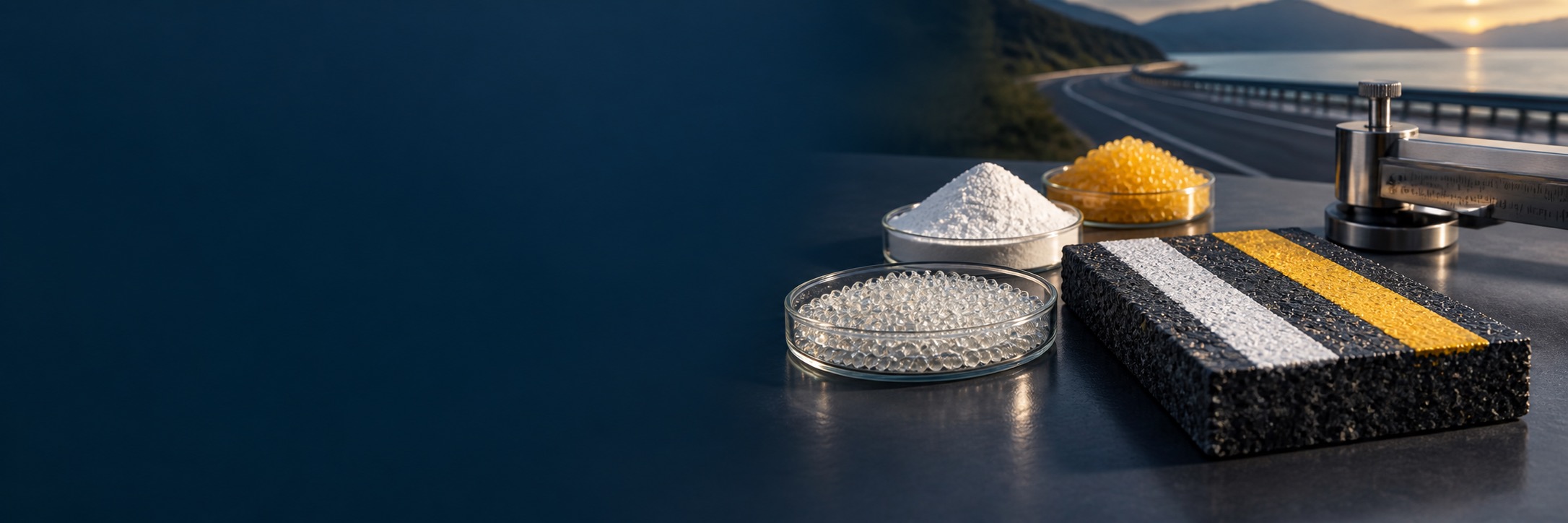
Thermoplastic road marking paint is widely used for highways, urban roads, intersections, parking areas, and pedestrian crossings. Its relatively fast setting time, wear resistance, and compatibility with reflective glass beads make it a popular choice for permanent road markings.
Thermoplastic road marking paint is widely used for highways, urban roads, intersections, parking areas, and pedestrian crossings. Its relatively fast setting time, wear resistance, and compatibility with reflective glass beads make it a popular choice for permanent road markings.
However, the cost per square meter varies depending on raw material prices, application thickness, glass bead consumption, marking design, and installation requirements. Understanding these factors helps contractors estimate project costs and compare suppliers more accurately.
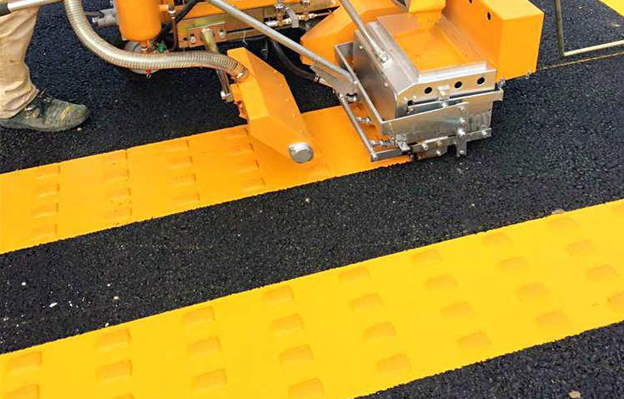
1. What Is the Material Cost of Thermoplastic Road Marking Paint?
Thermoplastic road marking material is typically supplied as a solid powder or granular mixture containing binders, pigments, fillers, and additives. It is heated before application and hardens as it cools.
For preliminary budgeting, the following figures can serve as illustrative estimates rather than verified market quotations:
- Thermoplastic material: approximately US$0.80–2.00 per kg.
- Glass beads: approximately US$0.80–2.00 per kg.
- Installed road markings: potentially US$2–8 or more per m², depending on the project and local labor costs.
Actual prices vary by country, order quantity, product specifications, shipping costs, and supplier. Installed prices should not be confused with material-only costs.
2. How Application Thickness Affects Cost
Application thickness is one of the main factors determining thermoplastic consumption.
For example, a marking applied at 2 mm thickness generally consumes more material per square meter than one applied at 1.5 mm.
The approximate material quantity can be estimated using:
Material consumption (kg/m²) = Thickness (mm) × Density (kg/L)
For illustration, if the applied material has a density of 2.0 kg/L:
- At 1.5 mm thickness: approximately 3.0 kg/m².
- At 2.0 mm thickness: approximately 4.0 kg/m².
- At 3.0 mm thickness: approximately 6.0 kg/m².
These estimates assume a uniform layer and do not include additional consumption caused by surface texture, application losses, or specific marking designs.
3. Glass Bead Costs
Reflective glass beads improve nighttime visibility by returning vehicle headlight illumination toward drivers.
Their cost depends on bead size, optical quality, surface treatment, and purchasing volume. Drop-on beads are commonly applied to freshly laid thermoplastic, while some systems also incorporate beads into the material.
The total bead cost depends on the specified application rate and the price per kilogram.
Glass bead cost per m² = Bead application rate (kg/m²) × Bead price (US$/kg)
Use the rate specified in the project requirements rather than assuming the same bead consumption for every marking system.
4. Other Factors Affecting Total Cost
Color: White and yellow are common standard colors. Specialized colors may cost more depending on pigment requirements.
Marking design: Straight lines are generally simpler to apply than arrows, symbols, lettering, and complex road markings.
Order quantity: Bulk purchases may reduce the unit price, while small orders may incur higher packaging and delivery costs.
Surface condition: Uneven or damaged pavement can increase preparation and material consumption.
Labor and equipment: Installation costs depend on local wages, equipment, traffic management, road closures, and project size.
5. How to Calculate the Total Material Cost
Consider an illustrative project requiring 1,000 m² of thermoplastic markings.
Assume the material consumption is 4 kg/m² and the purchase price is US$1.20/kg.
- Required thermoplastic: 1,000 × 4 = 4,000 kg.
- Thermoplastic material cost: 4,000 × $1.20 = US$4,800.
- Material cost per square meter: US$4.80/m².
This example excludes glass beads, primer where required, material waste, freight, labor, equipment, and taxes.
Conclusion
The cost per square meter of thermoplastic road marking depends primarily on material price, application thickness, glass bead requirements, and installation conditions. Calculating consumption first provides a more reliable estimate than comparing the price per kilogram alone.
For an accurate quotation, confirm the required thickness, color, glass bead specifications, total order quantity, and delivery destination. These details help determine the actual material cost and overall project budget.
This guide is an introduction. Use the selected product’s technical and safety instructions and the applicable project specification for installation.
Back to Resources