
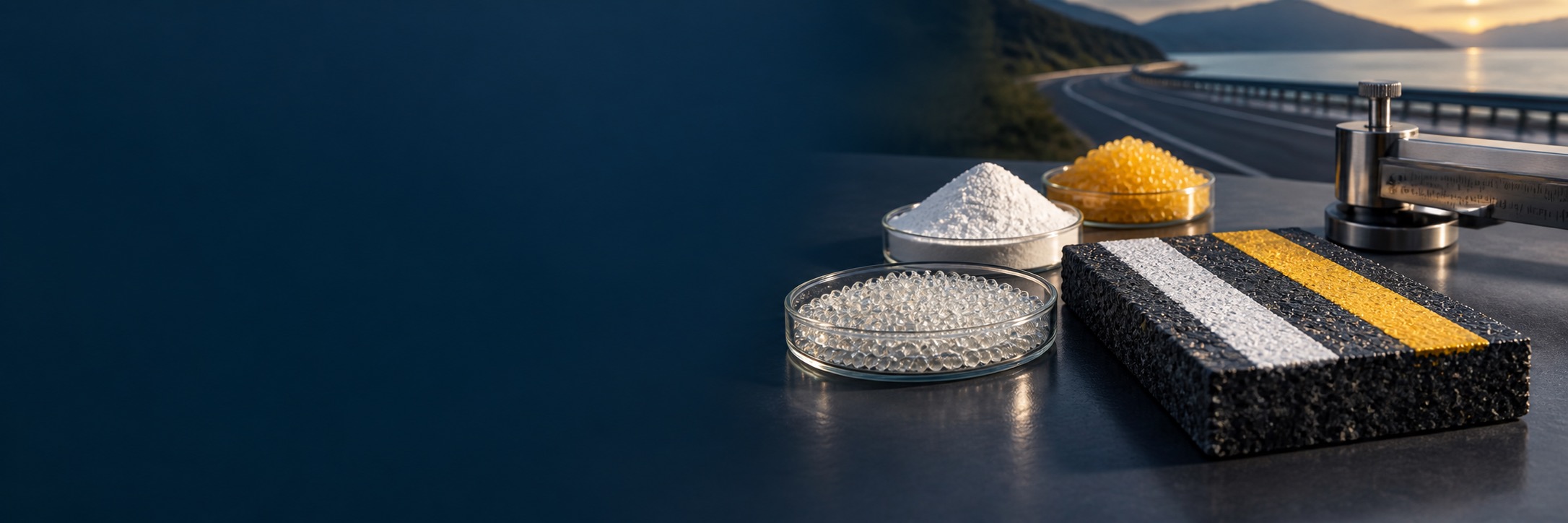
Road marking paint plays an essential role in traffic management, road safety, and pavement organization. It is used to create lane lines, directional arrows, pedestrian crossings, parking spaces, and other traffic symbols. Selecting the right paint requires an understanding of its composition, performance characteristics, application methods, and compatibility with different pavement surfaces.
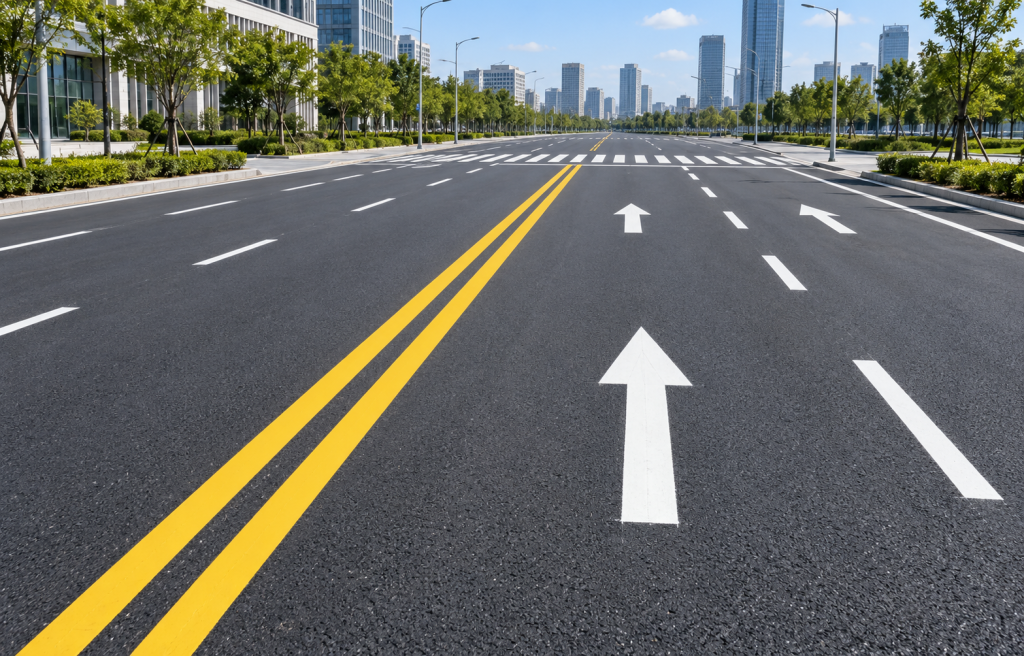
Road marking paint plays an essential role in traffic management, road safety, and pavement organization. It is used to create lane lines, directional arrows, pedestrian crossings, parking spaces, and other traffic symbols. Selecting the right paint requires an understanding of its composition, performance characteristics, application methods, and compatibility with different pavement surfaces.
This technical guide explains the main types of road marking paint and the factors to consider when choosing materials for road construction and maintenance projects.
1. What Is Road Marking Paint?
Road marking paint is a specialized coating designed to create visible markings on asphalt, concrete, and other suitable pavement surfaces. Unlike ordinary architectural paint, it must withstand vehicle traffic, tire abrasion, weather exposure, and repeated temperature changes.
A typical road marking paint formulation contains several components:
- Binder: Forms the film and helps the paint adhere to the pavement.
- Pigments: Provide color, opacity, and visual contrast.
- Fillers: Adjust film properties, consistency, and material cost.
- Solvents or water: Control viscosity and application characteristics, depending on the formulation.
- Functional additives: Improve properties such as flow, drying, storage stability, and weather resistance.
Glass beads may also be incorporated into the material or applied during installation to improve nighttime visibility through retroreflection.
2. Main Types of Road Marking Paint
Different formulations are designed for different traffic conditions, application equipment, and performance requirements.
Water-Based Road Marking Paint
Water-based paint uses water as its primary liquid carrier. It is commonly used for parking lots, urban roads, and other applications where its drying characteristics and performance meet project requirements.
Advantages include relatively low volatile organic compound content compared with many solvent-based formulations and convenient cleanup before the paint dries. However, drying can be affected by humidity, temperature, and rainfall.
Solvent-Based Road Marking Paint
Solvent-based paint uses organic solvents to control viscosity and application properties. Depending on the formulation, it can provide good adhesion, fast drying, and practical application across various pavement marking projects.
Its limitations may include higher VOC emissions, solvent-handling requirements, and flammability considerations. Local environmental and workplace regulations should be checked before use.
Thermoplastic Road Marking Material
Thermoplastic is a heat-applied marking material rather than conventional liquid paint. It is heated until molten, applied to the pavement, and allowed to cool and solidify.
It is commonly selected for highways, intersections, pedestrian crossings, and other areas requiring durable markings. Installation requires suitable heating and application equipment.
Two-Component Road Marking Materials
Two-component systems, including certain reactive resin formulations, cure through a chemical reaction after the components are mixed. Depending on the chemistry and product design, they can provide good wear resistance and adhesion.
These materials may be suitable for high-demand markings, colored pavement areas, and specialized traffic applications. Correct mixing ratios, pot life, and curing conditions are critical to performance.
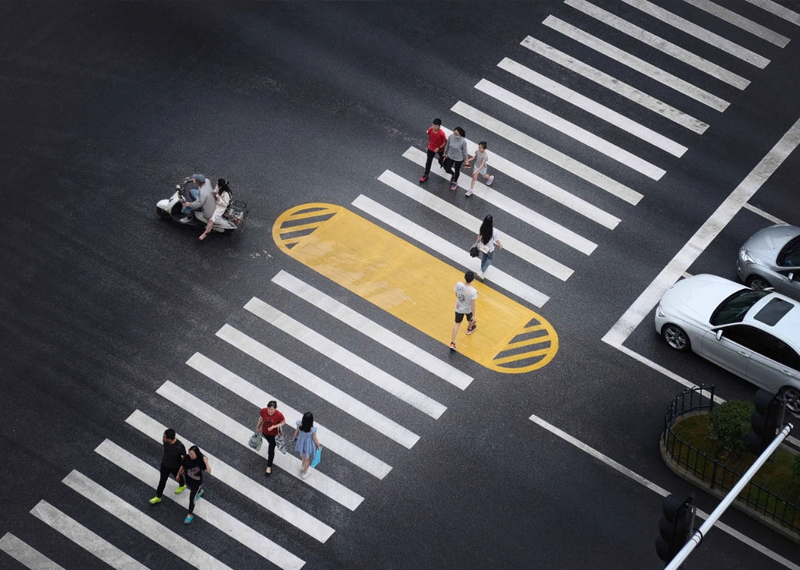
3. Important Technical Performance Properties
When evaluating road marking paint, consider more than color and initial appearance.
Adhesion: The coating must bond effectively to the pavement. Surface contamination, moisture, weak concrete, and unsuitable primers can reduce adhesion.
Drying and curing time: The marking must reach the required condition before traffic opens. Drying time depends on formulation, film thickness, temperature, humidity, and airflow.
Abrasion resistance: The material should withstand tire friction, turning movements, and repeated traffic loading.
Color and visibility: Suitable pigments and adequate contrast help road users recognize markings under different lighting conditions.
Retroreflectivity: Glass beads can return vehicle headlight illumination toward drivers, improving nighttime visibility. Performance depends on bead quality, application, embedding depth, and the condition of the marking.
Weather resistance: Rain, UV exposure, temperature changes, and freeze-thaw cycles may affect long-term performance.
4. How to Apply Road Marking Paint
A reliable application process typically includes the following steps:
- Inspect the pavement: Identify cracks, loose material, moisture, oil, dust, and other potential problems.
- Prepare the surface: Clean the pavement and allow it to meet the product’s moisture and cleanliness requirements.
- Confirm compatibility: Check whether the paint is suitable for asphalt or concrete and whether a primer is required.
- Set application parameters: Follow the manufacturer’s recommended film thickness, application rate, and equipment settings.
- Apply the marking: Use suitable spraying, rolling, or line-marking equipment.
- Apply glass beads if specified: Use the recommended bead type and application rate for the selected system.
- Allow sufficient drying or curing: Protect the marking from traffic until it meets the manufacturer’s traffic-opening requirements.
Poor surface preparation and incorrect application thickness can shorten service life even when a high-quality product is used.
5. How to Choose the Right Road Marking Paint
The best material depends on the project’s operating conditions.
For parking lots and low-traffic areas, conventional water-based or solvent-based paints may be appropriate. For busy roads and intersections, thermoplastic or suitable high-performance reactive systems may offer better long-term value.
Before purchasing, evaluate traffic volume, pavement type, climate, required service life, application equipment, environmental regulations, and maintenance budget. Compare the total cost per square meter, including material consumption, labor, traffic control, and expected maintenance.
6. Quality Control and Maintenance
After application, inspect the markings for uniform coverage, clear edges, consistent color, adhesion, and glass bead distribution where applicable. For performance-critical projects, use relevant local road-marking standards and test methods to verify requirements such as retroreflectivity, skid resistance, and wear performance.
Routine inspections help identify fading, peeling, cracking, and loss of nighttime visibility. Prompt maintenance can restore marking performance and help maintain clear traffic guidance.
Conclusion
Road marking paint is a key component of modern road safety infrastructure. Understanding the differences between water-based paint, solvent-based paint, thermoplastic materials, and two-component systems helps contractors select suitable products for each application.
By combining appropriate material selection, proper pavement preparation, controlled application, and regular maintenance, road marking projects can achieve better visibility, reliable adhesion, and improved service life.
This guide is an introduction. Use the selected product’s technical and safety instructions and the applicable project specification for installation.
Back to Resources