

Thermoplastic road marking paint is a heat-applied material commonly used for permanent road markings. It typically contains synthetic resins, pigments, fillers, and glass beads. The material is heated until molten before being applied to the pavement.
Choosing the right road marking material is essential for road safety, durability, and maintenance costs. Thermoplastic road marking paint and cold-applied marking materials are two widely used options for highways, urban roads, parking lots, and other traffic areas. Although both create visible road markings, they differ in application methods, curing times, durability, and suitable applications.
Understanding these differences helps contractors and road authorities select the most appropriate solution for each project.
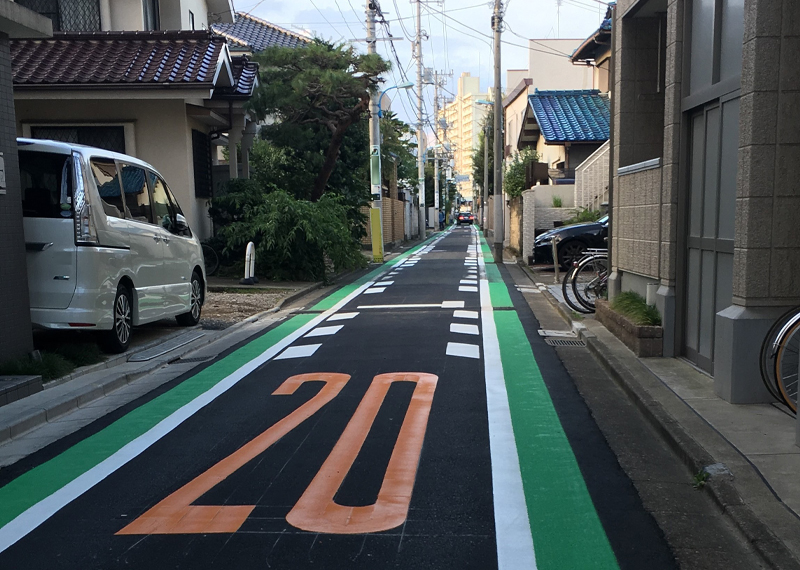
1. What Is Thermoplastic Road Marking Paint?
Thermoplastic road marking paint is a heat-applied material commonly used for permanent road markings. It typically contains synthetic resins, pigments, fillers, and glass beads. The material is heated until molten before being applied to the pavement.
After application, the thermoplastic material cools and solidifies, forming a durable marking layer. Glass beads can be incorporated into or applied onto the marking to improve nighttime visibility through retroreflection.
Key characteristics:
- High durability under suitable traffic and pavement conditions.
- Good resistance to abrasion and repeated vehicle loading.
- Relatively thick marking layers that can provide a long service life.
- Fast solidification after application when temperature and conditions are appropriate.
- Commonly used for highway lines, pedestrian crossings, directional arrows, and stop lines.
Thermoplastic markings require specialized heating equipment and careful temperature control during installation.
2. What Are Cold-Applied Marking Materials?
Cold-applied road marking materials are applied without heating the material to a molten state. This category includes water-based road marking paint, solvent-based paint, two-component materials, and certain reactive resin systems.
Depending on the formulation, cold-applied materials may dry through water or solvent evaporation, or cure through a chemical reaction. Application methods include spraying, rolling, brushing, and specialized dispensing equipment.
Key characteristics:
- Generally require less heating equipment than thermoplastic systems.
- Available in different formulations for various pavement and project requirements.
- Suitable for parking lots, urban roads, warehouses, and selected highway applications.
- Can be applied in thin or thicker layers, depending on the material.
- May offer convenient application for maintenance and smaller projects.
Curing time varies significantly. Water-based paint, solvent-based paint, and two-component reactive materials should not be treated as having the same drying or curing characteristics.
3. Key Differences Between Thermoplastic and Cold-Applied Materials
| Comparison | Thermoplastic Markings | Cold-Applied Materials |
|---|---|---|
| Application | Heated before application | Applied without melting the material |
| Equipment | Heating and application equipment | Equipment depends on the formulation |
| Film thickness | Commonly thicker | Usually thinner for conventional paints |
| Durability | Often suitable for heavy traffic | Varies by chemistry and application thickness |
| Traffic opening | After cooling and solidification | After sufficient drying or chemical curing |
| Initial equipment cost | Can be higher | Often lower for conventional paint systems |
| Typical applications | Highways, crossings, stop lines | Parking areas, urban roads, maintenance markings |
These are general comparisons. Two-component cold-applied systems can provide high durability, while actual performance depends on formulation, thickness, pavement preparation, and installation quality.
4. Which Material Is More Cost-Effective?
Material price alone does not determine the total cost of a road marking project. Contractors should consider material consumption, labor, equipment, surface preparation, traffic control, and maintenance frequency.
Thermoplastic markings may offer good long-term value on busy roads because of their durability and suitability for thicker applications. However, heating equipment and installation requirements can increase initial costs.
Conventional cold-applied paints may be more economical for parking lots, low-traffic areas, and projects requiring relatively simple application equipment. Their service life may be shorter under heavy traffic, potentially increasing maintenance frequency.
For a fair comparison, evaluate the expected service life and total maintenance cost per square meter rather than comparing material prices alone.
5. How to Choose the Right Road Marking Material
Before selecting a product, consider the following factors:
- Traffic volume: Busy highways and intersections may require more wear-resistant materials.
- Pavement type: Asphalt and concrete can have different adhesion requirements.
- Weather conditions: Temperature, humidity, and rainfall can affect application and curing.
- Project schedule: Determine how quickly the marked area must reopen to traffic.
- Visibility requirements: Glass beads and suitable application methods can improve nighttime visibility.
- Available equipment: Confirm that the contractor has the equipment required for the selected material.
Always follow the manufacturer’s technical data sheet for surface preparation, application thickness, temperature limits, curing requirements, and traffic opening.
Conclusion
Thermoplastic road marking paint and cold-applied marking materials each have advantages. Thermoplastic is often a strong choice for durable markings on busy roads, while cold-applied products provide flexibility for different applications, budgets, and installation requirements.
The best solution depends on traffic conditions, pavement type, expected service life, installation equipment, and project cost. Selecting a compatible material and applying it correctly can improve marking visibility, durability, and overall road safety.
This guide is an introduction. Use the selected product’s technical and safety instructions and the applicable project specification for installation.
Back to Resources